Dogtown and the Z-Boys: How Empty Pools Changed Skateboarding
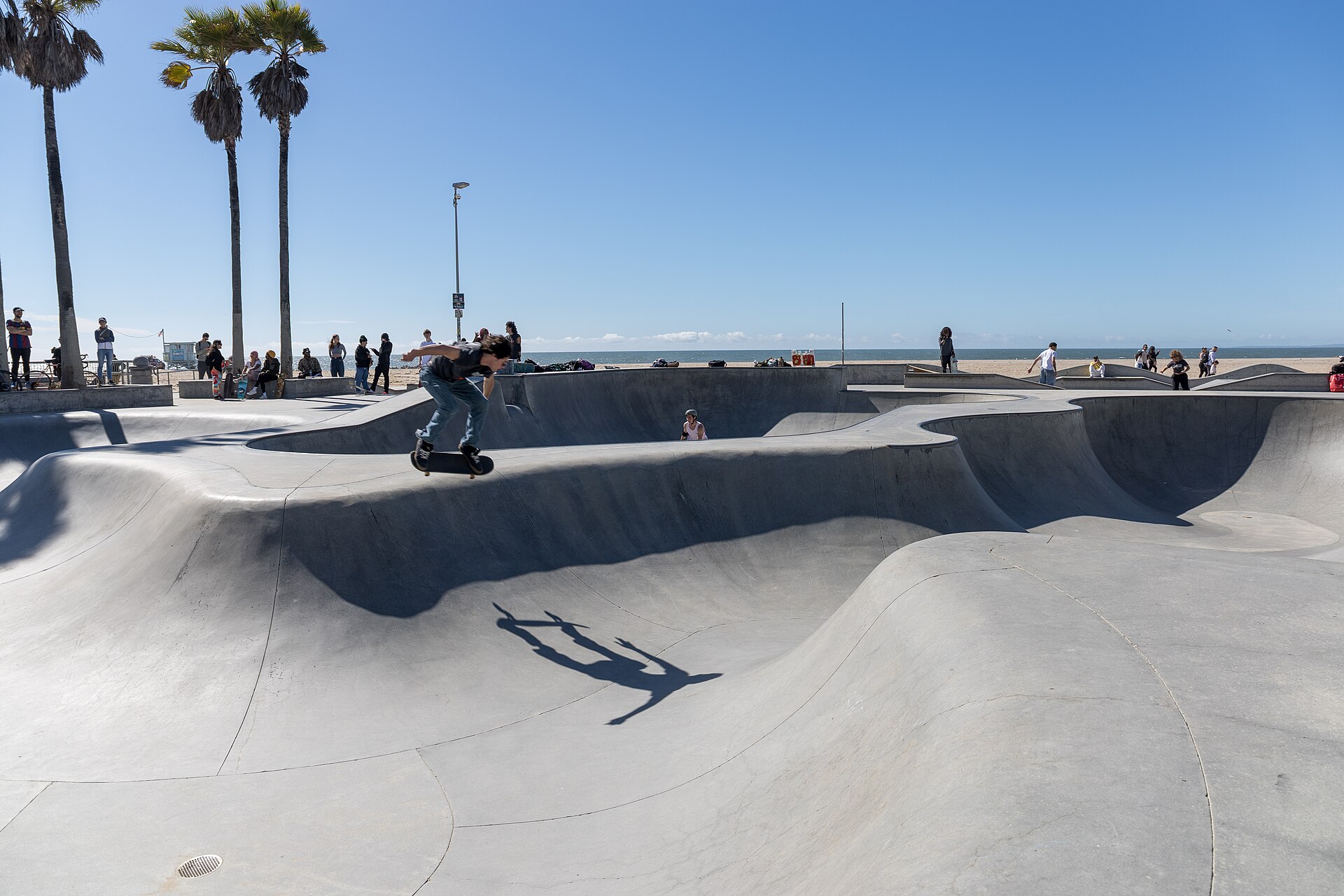
Modern skateboarding was not invented in a laboratory or a boardroom. It was worked out, in the mid-1970s, by a surf team from a rundown stretch of Santa Monica and Venice that its residents called Dogtown — first on the broken concrete around a decaying amusement pier, then on the sloped asphalt of schoolyards, and finally, when a severe drought emptied the region's backyard swimming pools, on the curved walls of the pools themselves. The team was the Zephyr Competition Team. History knows its members as the Z-Boys.
The Zephyr shop
The institution at the centre of the story was a shop. In 1973, Jeff Ho, Skip Engblom and Craig Stecyk opened Jeff Ho Surfboards and Zephyr Productions in Santa Monica, and began recruiting young locals to represent them in surfing competitions. Nathan Pratt, who had worked in the shop as an apprentice surfboard shaper, was the first member of the team. The surf team came first and the skate team second — a sequence that explains everything about the Z-Boys' style. Their primary surfing spot was the Cove at Pacific Ocean Park, where the challenge of navigating derelict pilings, twisted rebar and broken concrete produced a daring, aerobatic kind of surfing. Most of the team lived in the Dogtown area, and many, in the Smithsonian's summary of the Dogtown story, came from broken homes and found in the team a fierce group identity. When the waves flattened in the afternoons, they skated — and thanks to the arrival of urethane wheels, which transformed traction, they began transferring their surfing style wholesale onto concrete.
Del Mar, 1975
The official Zephyr skateboarding team formed in 1975 and grew to twelve original members: Jay Adams, Tony Alva, Bob Biniak, Chris Cahill, Paul Constantineau, Shogo Kubo, Jim Muir, Peggy Oki, Stacy Peralta, Nathan Pratt, Wentzle Ruml and Allen Sarlo — eleven young men and, in Oki, the team's one woman. They practised in the backs of four schools in the surrounding area, skating low to the ground and dragging their hands against the concrete as if riding a wave, taking inspiration from the surfer Larry Bertlemann. Their first appearance at a skateboard competition came at the 1975 Del Mar Nationals, the first major skateboarding competition since the mid-1960s. The older establishment critiqued their low, aggressive freestyle style; the results were harder to argue with. Half the finalists were Zephyr team members — Jay Adams placed third and Tony Alva fourth in freestyle, and Peggy Oki placed first in women's freestyle. Their performance, and Adams' in particular, marked the beginning of a national change in the style of skateboarding.
The drought pools, 1976-77
The vertical revolution came a season later, and its cause was weather. From 1976 to 1977, Southern California experienced a major drought that contributed to the first and fourth driest years in Californian history. To conserve water, neighbourhood homes drained their backyard swimming pools, leaving empty bowls of smooth concrete with sloping walls. The Z-Boys took advantage of those walls — often in pools they had no permission to be in — to push aerial skateboarding past anything the flat ground had allowed, riding the transitions the way they rode waves and getting airborne off the lip. Craig Stecyk's photographs of the aerial manoeuvres appeared in Skateboarder magazine in a series titled the Dogtown Articles, and those photographs carried the new style to the rest of the country. The pool, for the record, came after Del Mar, not before it: the competition announced the style in 1975, and the drought pools of 1976 and 1977 gave it its vertical dimension.
A short-lived team, a permanent change
Fame dissolved the team almost immediately. After the Dogtown Articles, interest from rival companies drew members away to more lucrative sponsorships, and by the end of 1976 the Zephyr Competition Team had ceased to exist. As an organisation, the Z-Boys lasted roughly two years. As an influence, they are still generally regarded as the most influential team in skateboarding history: their surfing-based style and aerial moves formed the foundations of contemporary vert and transition skating. The story has since been told in the documentary Dogtown and Z-Boys and the feature film Lords of Dogtown, both drawing on Stecyk's documentation. But the essential geography has not changed. A surf shop in Dogtown, a pier in ruins, four schoolyards, and a drought that emptied the pools of Los Angeles at exactly the moment a dozen teenagers were ready to find out what the walls were for.