A Historic Architecture Walk Through Venice
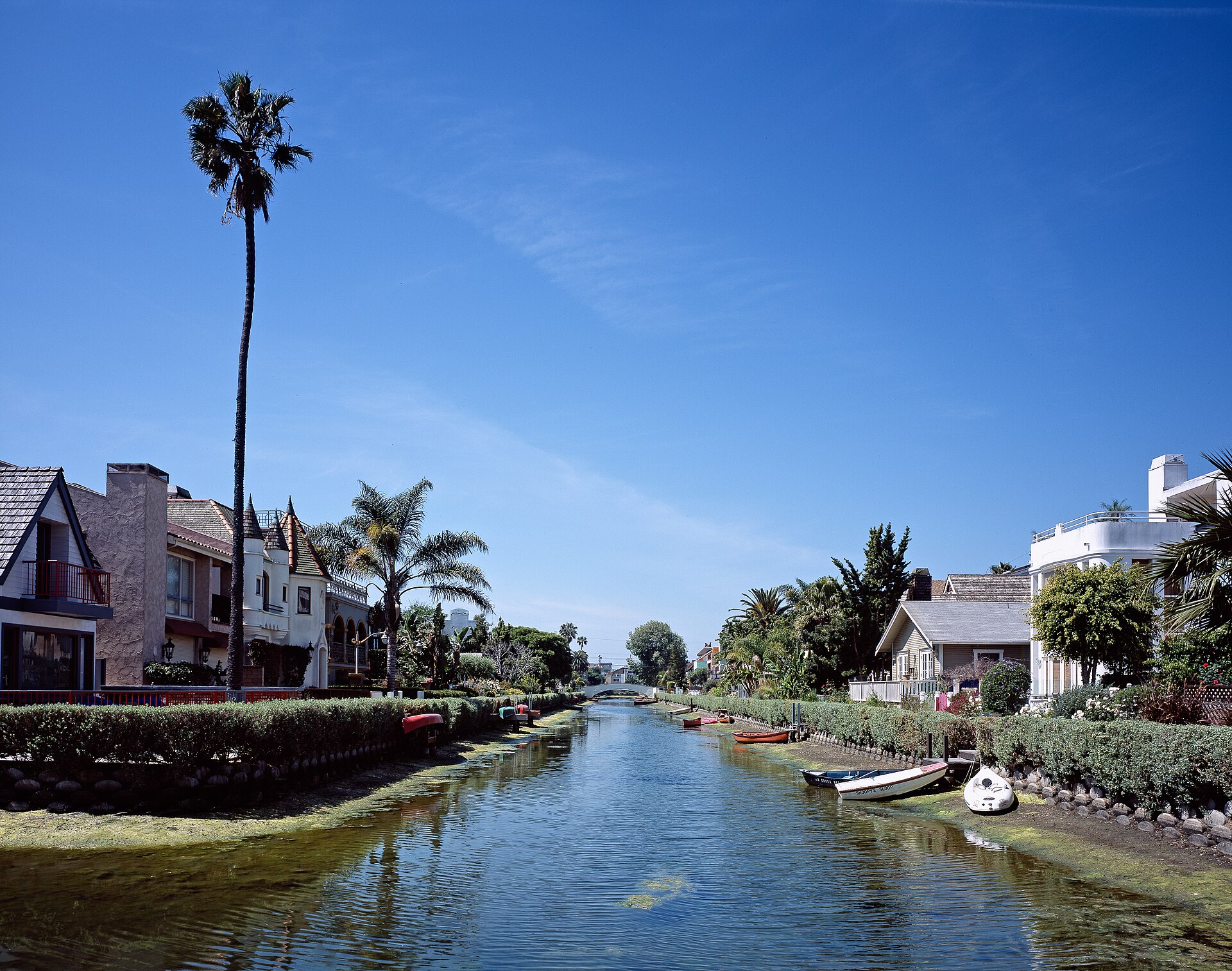
Venice was built twice: once as Abbot Kinney's 1905 resort, and again, decade by decade, by everyone who refused to let that idea be demolished. A walking route through its surviving buildings tells the story better than any plaque — if you know which buildings are documented, and what is actually true about them. This walk runs from the canals to Windward Circle to Main Street. Everything is viewed from public streets; several of these are workplaces or private homes.
The canal district cottages
Start in the Venice Canal Historic District, around the six surviving canals — Carroll, Linnie, Howland, Sherman, Eastern and Grand. The architecture is the exhibit: early 20th-century bungalows and cottages beside Mediterranean Revival houses and assertively modern new builds, all on pedestrian walkways with footbridges. The district was added to the National Register of Historic Places in 1982, and the canals and walkways were restored in a major project completed in 1993 after decades of disrepair. Read the mix honestly — preservation here saved the water and the paths, while individual houses kept changing. Stay on public walkways; these are homes.
Windward Circle and the Venice Post Office
Walk north to Windward Circle and 1601 Main Street, the former Venice Post Office. City of Los Angeles records describe a 1939 building constructed during the Great Depression under the Works Progress Administration, and the Los Angeles Conservancy describes its Mediterranean Revival design — stucco walls, symmetrical facade, red clay barrel tile roofing. Inside was its treasure: Edward Biberman's 1941 lobby mural, Story of Venice, showing Abbot Kinney framed by his canals, commissioned through the federal Section of Fine Arts. The post office was sold out of postal service in 2012, so do not promise yourself a look at the mural — the building is now private, and the Conservancy notes it was recognised as eligible for historic listing rather than formally designated. Admire the exterior, and let the closed door be part of the lesson about preservation.
Old City Hall: Beyond Baroque, 681 N. Venice Boulevard
Continue to 681 N. Venice Boulevard. Beyond Baroque Literary Arts Center, founded in 1968, is housed in the original Venice City Hall building — Venice was an independent city until its annexation by Los Angeles in 1925, a date LA Parks' own Venice history confirms. The building now holds readings, workshops, a bookstore and gallery. It is the walk's best example of adaptive survival: a civic building that stayed public in spirit by changing its job.
Finish: the Binoculars Building, 340 Main Street
End at 340 Main Street with the Binoculars Building (1991), Frank Gehry's building for Chiat/Day with Claes Oldenburg and Coosje van Bruggen's Giant Binoculars as its facade. Against the 1939 post office it completes the argument: Venice architecture has always mixed the civic, the commercial and the theatrical. Walk back via Windward Avenue under the Venice Sign replica and you have covered ninety years of building in about a mile.