The Boardwalk Lottery: How Venice Performers Get Their Spot
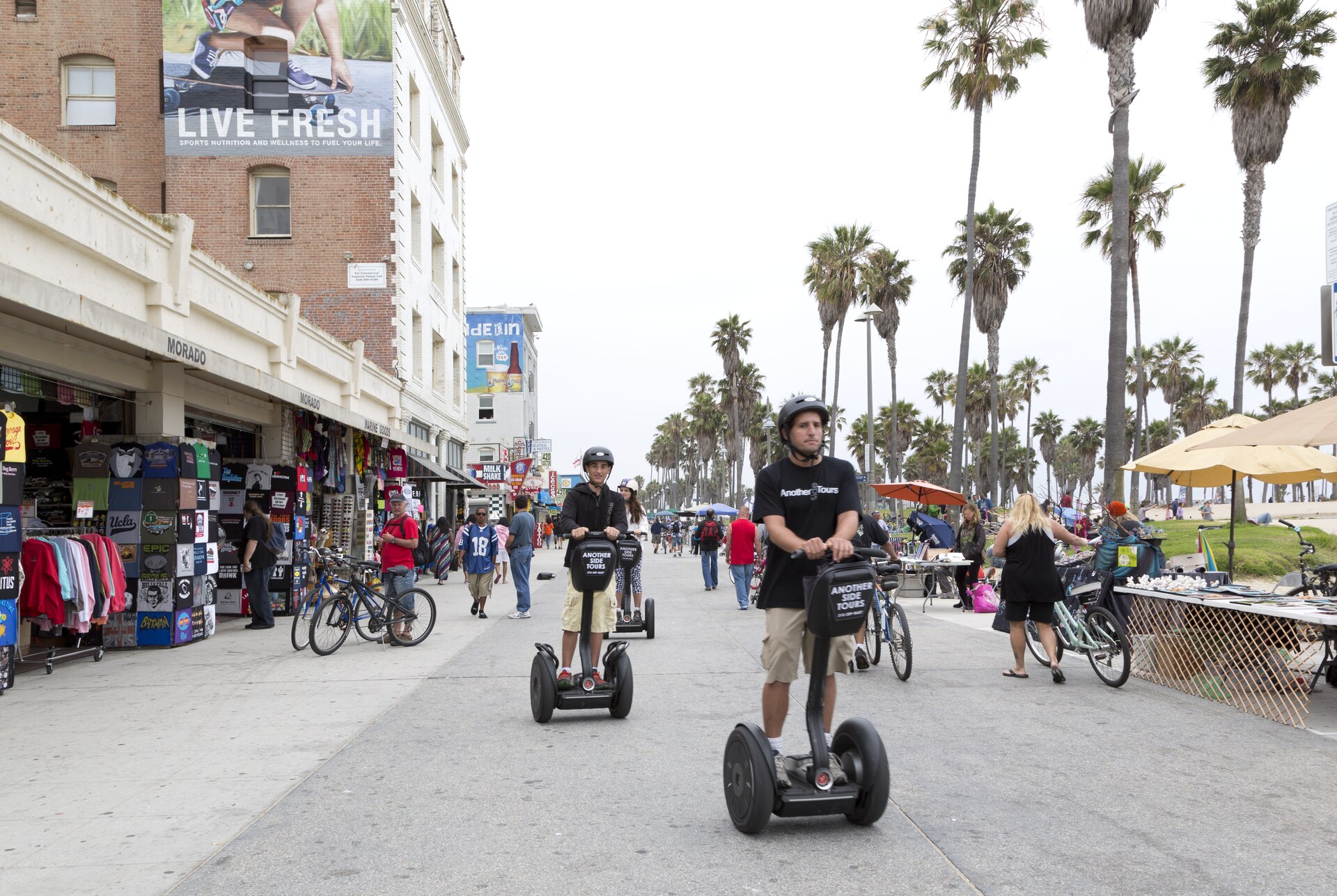
The Venice boardwalk looks like the freest performance space in Los Angeles. In one respect it is: the City has long treated Ocean Front Walk as a traditional public forum for performance, visual art and free speech. But a pitch on the west side of the boardwalk is a scarce piece of public land, and scarce public land gets a system. In Venice, that system has a name everyone who works the boardwalk knows. It is called the lottery.
The law underneath the show
The framework is Section 42.15 of the Los Angeles Municipal Code, which prohibits unregulated vending on the boardwalk while protecting free-speech activities. The Board of Recreation and Park Commissioners approved a Public Expression Participant Program for the boardwalk on October 1, 2003, establishing designated spaces, to be assigned by lottery, for people conducting constitutionally protected expressive activities. Under the ordinance as described in the Department of Recreation and Parks' 2008 board report, the boardwalk's designated spaces total 205: 105 spaces in the P-Zones and 100 spaces in the I-Zones. The municipal code in its current form likewise provides for 205 designated spaces, allocated under a system adopted by the Board — which is why the precise mechanics matter, and why performers should always confirm the current programme rules with the Venice Beach Recreation Center rather than rely on any summary, this one included.
P-Zones and I-Zones
The two zones divide the boardwalk by kind of activity. P-Zone spaces are for performance, traditional expressive speech and petitioning, together with the sale of a short list of expressive items: newspapers, leaflets, pamphlets, bumper stickers, patches and buttons, books created by the vendor, and recordings of the vendor's own performances. Five of the P-Zone spaces are reserved for large acts — performances that draw crowds of more than 25 people — and ten P-Zone spaces are unassigned and available on a first-come, first-served basis, two of them for giving away food. I-Zone spaces allow everything the P-Zones allow, plus the vending of expressive items created by the vendor, or items inextricably intertwined with the vendor's message — the category under which much of the boardwalk's artist-vending has operated. In the 2008 programme rules, the P-Zone spaces sat between 17th Avenue and Clubhouse Avenue, between Wavecrest Avenue and Park Avenue, and between Sunset Avenue and Paloma Avenue; the I-Zone spaces sat between Clubhouse and Wavecrest, between Park and Sunset, and between Paloma and Navy Street.
How the lottery ran
The programme rules revised in 2008 describe the lottery in operational detail. A lottery was held every Tuesday, supervised by Venice Beach Recreation Center staff, at 8:30 a.m. at the Recreation Center, 1800 Ocean Front Walk, in front of the Los Angeles Police Department substation; when a City holiday fell on a Tuesday, the lottery moved to Wednesday at the same time and place. The drawing assigned spaces for both the coming weekdays, Monday through Friday, and the coming weekend. A permit was required for an assigned P-Zone space during peak season, defined in those rules as the Saturday before Memorial Day through November 1. Three rules gave the lottery its character. You had to be physically present at the drawing. You could not give or trade your space to anyone else, including family. And you could not sell, buy or barter a space. Spaces left unassigned after the lottery could be requested from Recreation Center staff for the remainder of the period, first come, first served. In the five large-act spaces, performers rotated on the hour from 11 a.m. when more than one act wanted the same space.
Why a lottery, of all things
The lottery exists because every simpler system fails on a boardwalk. First-come-first-served rewards whoever can camp a pitch and invites conflict over the best ground; permanent assignment would convert a public forum into private tenure; pure discretion would invite favouritism and litigation. A weekly public drawing, with spaces that cannot be sold or transferred, is the city's attempt — imperfect, much-litigated, repeatedly revised — to keep the allocation as impersonal as the performances are personal. The acrobat and the first-time poet enter the same drawing. That, in the end, is the most Venice feature of the whole arrangement: the show on the boardwalk is gloriously unranked, because the system that assigns the ground refuses, on paper at least, to rank anyone at all.