Venice West: When the Beats Came to the Beach
In the 1950s, Venice was cheap, dilapidated and largely left alone, and for a particular kind of young artist that combination was the whole attraction. The resort Kinney built had decayed into what Lawrence Lipton, in his 1959 book The Holy Barbarians, called a slum by the sea — pensioners in the old hotels, plaster colonnades scaling and cracked. Into that decay moved the poets, painters and jazz listeners who became known, in Lipton's coinage, as Venice West: the Southern California chapter of the Beat Generation, and for a few years the most publicised bohemia in America.
Lipton and the invention of Venice West
Lipton was the scene's elder, publicist and self-appointed historian. Born in Lodz, Poland, in 1898 and raised in Chicago, he had worked as a journalist, jazz composer and graphic artist before settling in Venice in the mid-1950s and turning to poetry. In The Holy Barbarians he argued that Venice — cheaper, grungier and, in his telling, purer and more serious than Greenwich Village or San Francisco's North Beach — was the newest American bohemia, and that the older centres had become square. Critics dubbed him the merchant of Venice for the energy with which he promoted the scene he also chronicled. His portrait needs reading with that doubleness in mind: Lipton was a participant with a book to sell. But the scene he described was real, and its addresses survive in the record.
Two rooms: the Gas House and the Venice West Cafe
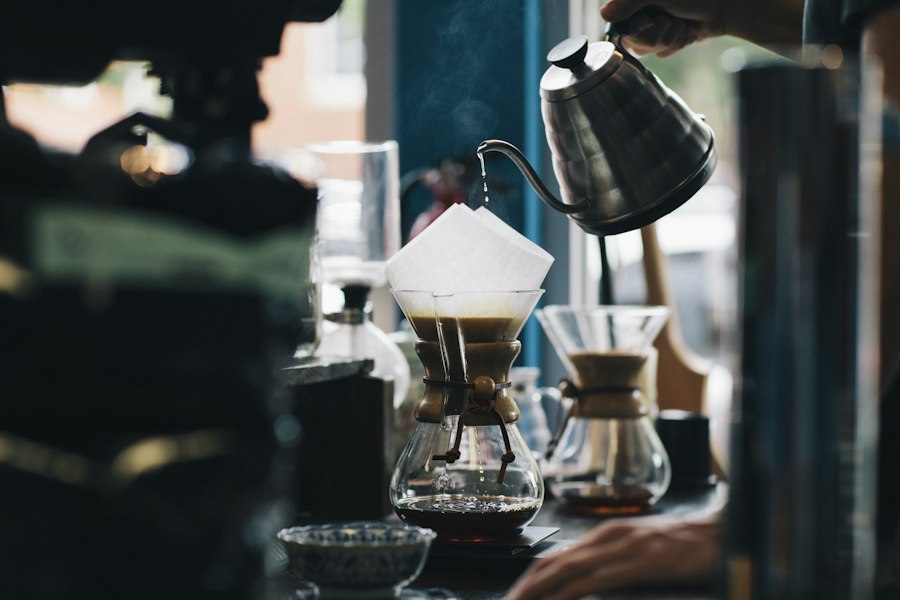
The centre of Lipton's Venice West was the Gas House, at 1501 Ocean Front Walk, a performance venue and club owned by lawyer Al Matthews and run by the Beat figure Eric Nord, who hired Lipton as director of entertainment. There Lipton staged jazz and poetry nights and public discussions, presenting the Gas House as a workshop for artists, poets, musicians, painters and sculptors. The scene's other room was quieter and, in the long run, more consequential for poetry itself. The Venice West Cafe was opened in 1958 by the poet Stuart Perkoff, in a building dating to 1922 according to the cafe's historic-cultural monument application filed with the City of Los Angeles. Perkoff established it as a place to relax, drink coffee, and read or listen to poetry and jazz. John Arthur Maynard's history Venice West: The Beat Generation in Southern California centres on Perkoff and Lipton as the enclave's two most newsworthy residents — Perkoff the more gifted poet, whose circle included the poets Tony Scibella and Frank T. Rios.
The campaign against the barbarians
Attention was the scene's undoing. For most of the 1950s, as Maynard's history records, the Venice Beat figures lived and worked in relative isolation; once the media decided Beats made good copy, reporters, would-be beatniks and others invaded in force, and many established residents began a sustained campaign to purge the community of bohemianism. Pressure mounted on the venues. The Gas House was shuttered in 1960, served briefly as a learning centre, and was demolished in 1962 as part of Venice redevelopment. Perkoff, beleaguered, turned the Venice West Cafe over in 1960 to John Kenevian and Rocco Brescise, who kept it alive until John and Anna Haag acquired it in 1962. The enclave itself did not so much end as disperse, yielding the stage, in Maynard's account, to a new generation of political activists.
What Venice West left behind
The direct legacy is institutional as much as literary. When George Drury Smith founded Beyond Baroque in 1968, it filled an important gap left by the closing of the Gas House and the decline of the Venice poetry scene, in PBS SoCal's summary — and the poets of the Venice West generation, Perkoff among them in influence, run through its early workshops. A second legacy is methodological: Venice West established the pattern that has repeated in the neighbourhood ever since, in which low rents in a beautiful, neglected place gather artists, attention follows, property campaigns follow attention, and the artists' institutions — if they are lucky and organised — are what remain when the gathering moves on. The Gas House is gone and the cafe is a memory preserved in a monument application. The Wednesday workshop at Beyond Baroque, a few blocks inland, is the thread that was never cut.